
Fear and Greed in Trading: How Emotions Move Markets
⚡ Key Takeaways
- Fear and greed are the two dominant emotions that drive market cycles and individual trading decisions
- The CNN Fear and Greed Index quantifies market sentiment using seven indicators on a scale of 0 to 100
- Extreme fear often marks market bottoms; extreme greed often marks market tops, making them useful contrarian signals
- Individual traders must manage fear (which causes premature exits) and greed (which causes overextension)
- Systematic rules and position sizing remove the need for emotional decision-making
The Fear and Greed Cycle
Fear and greed are the two most powerful emotions in financial markets. They drive market cycles, create bubbles and crashes, and cause individual traders to make irrational decisions.
The cycle follows a predictable pattern. During market advances, greed builds gradually. Traders become optimistic, then confident, then euphoric. At the peak of euphoria, greed is at its maximum and the market is most vulnerable. When the market reverses, fear replaces greed. Traders become anxious, then fearful, then panicked. At the peak of panic, fear is at its maximum and the market is closest to a bottom.
Understanding this cycle gives you a contrarian edge: buy when others are fearful, sell when others are greedy.
The CNN Fear and Greed Index
The CNN Fear and Greed Index is one of the most widely followed sentiment indicators. It combines seven factors into a single score from 0 (extreme fear) to 100 (extreme greed).
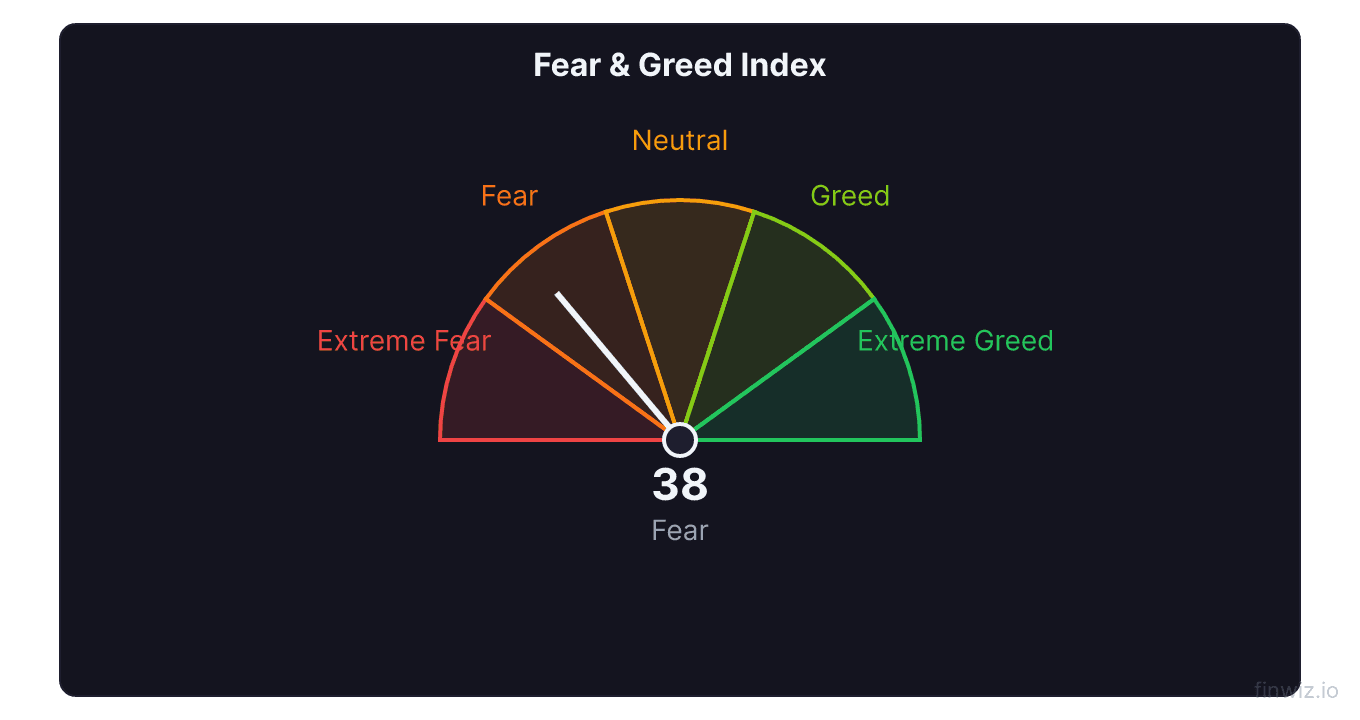
| Score Range | Sentiment |
|---|---|
| 0-25 | Extreme fear |
| 25-45 | Fear |
| 45-55 | Neutral |
| 55-75 | Greed |
| 75-100 | Extreme greed |
The Seven Components
- Market momentum: S&P 500 vs. its 125-day moving average
- Stock price strength: Number of stocks hitting 52-week highs vs. lows
- Stock price breadth: Advancing volume vs. declining volume
- Put and call options: Put/call ratio as a measure of fear
- Market volatility: VIX (fear gauge)
- Safe haven demand: Bond vs. stock returns
- Junk bond demand: Spread between junk bond and investment-grade yields
Using the Index as a Contrarian Signal
When the index reaches extreme fear (below 20), the market is often oversold and a bounce is likely. When it reaches extreme greed (above 80), the market is often overbought and a correction is probable.
This is not a precise timing tool but a useful context indicator. Combine it with technical analysis for better results.
Pro Tip
How Fear Affects Your Trading
Fear of Loss
The most basic fear in trading is the fear of losing money. This manifests as:
- Not taking valid entries: You see a setup that meets all your criteria but hesitate. By the time you decide, the opportunity has passed.
- Cutting winners too early: A trade moves in your favor but you take a small profit because you are afraid of giving it back. The stock then continues for a much larger move.
- Avoiding necessary risk: You reduce position sizes to the point where even winning trades produce negligible returns.
Fear of Missing Out (FOMO)
FOMO is the fear that a move will happen without you. It causes you to:
- Chase stocks that have already moved significantly
- Enter trades without proper analysis
- Abandon your trading plan to jump into something exciting
Managing Fear
- Define your risk before entering: When you know the maximum you can lose (1-2% of your account), the fear of the unknown diminishes.
- Use hard stop losses: Automatic stops remove the fear of making the exit decision.
- Focus on process: If you followed your plan, the outcome is irrelevant for your emotional state.
- Accept losses as costs: Just as a business has expenses, losses are a cost of trading.
How Greed Affects Your Trading
Holding Too Long
Greed causes you to hold winning trades past your planned exit because you want more. This often leads to watching a profitable trade turn into a loss.
Increasing Risk After Wins
After a winning streak, greed and overconfidence cause you to increase position sizes. This is dangerous because winning streaks do not last forever, and the inevitable losing trade will erase gains from multiple previous wins.
Lowering Standards
Greed makes you take trades that do not meet your criteria because you want to be in the market. Each marginal trade dilutes the quality of your overall strategy.
Managing Greed
- Set profit targets before entering: Know where you will exit and stick to it.
- Use trailing stops: Let the market decide when your trade is over.
- Maintain consistent position sizing: Do not increase size after wins.
- Follow a trading plan: Rules-based trading prevents greed from influencing decisions.
Building Emotional Resilience
Accept the Nature of Trading
Trading involves uncertainty, losses, and missed opportunities. Accepting these realities instead of fighting them reduces emotional volatility.
Develop a Routine
A consistent pre-market and post-market routine creates structure that reduces emotional reactivity. Know what you will do before the day starts.
Monitor Your Emotional State
Rate your emotional state before each trading session on a 1-10 scale. If anxiety or excitement is above 7, consider reducing your activity or stepping away.
Limit Exposure to Market Noise
Constant exposure to financial news, social media, and market commentary amplifies emotional reactions. Limit your information intake to what is relevant to your strategy.
Frequently Asked Questions
Is it possible to trade without emotion?
No. Emotions are part of being human. The goal is not to eliminate them but to prevent them from influencing your trading decisions. This is achieved through a systematic approach with pre-defined rules, not through emotional suppression.
How do I know if fear or greed is controlling my trading?
Review your trading journal. If you consistently cut winners early, fear is dominant. If you consistently hold losers too long or take unnecessary trades, greed or hope is dominant. Patterns in your journal reveal which emotions are most problematic.
Can the Fear and Greed Index predict market crashes?
The index can identify extreme sentiment conditions that precede corrections, but it cannot predict the exact timing of a crash. Markets can remain in extreme greed territory for extended periods before correcting. Use the index as one tool among many, not as a sole predictor.
What should I do during extreme market fear?
Extreme fear is often a buying opportunity for longer-term investors and swing traders. However, catching a falling knife is dangerous. Wait for signs of a bottom: support holding, bullish divergence, or a breakout above a short-term resistance level.
How do professional traders manage emotions?
Professional traders manage emotions through preparation, routine, and systematic rules. They pre-define every aspect of their trade (entry, stop, target) before the market opens. They maintain consistent position sizing regardless of recent results. They review their performance objectively through journaling.
Disclaimer
This is educational content, not financial advice. Trading involves risk, and you should consult a qualified financial advisor before making any investment decisions. Past performance does not guarantee future results.
Other Sentiment Indicators
The VIX (Volatility Index)
The VIX, often called the "fear gauge," measures the expected volatility of the S&P 500 over the next 30 days. It is derived from options prices and rises when traders buy protective put options.
| VIX Level | Market Sentiment |
|---|---|
| Below 15 | Complacency / Low fear |
| 15-20 | Normal |
| 20-30 | Elevated concern |
| 30-40 | High fear |
| Above 40 | Extreme fear / Panic |
High VIX readings often coincide with market bottoms because fear is at its peak. Low VIX readings can precede corrections because complacency has taken hold.
Put/Call Ratio
The put/call ratio compares the volume of put options (bearish bets) to call options (bullish bets). A high put/call ratio (above 1.0) indicates fear and can be a contrarian buy signal. A low ratio (below 0.7) indicates greed and can be a sell signal.
Investor Sentiment Surveys
Several organizations conduct weekly sentiment surveys of investors and advisors. The American Association of Individual Investors (AAII) survey is among the most watched. Extreme bullish or bearish readings in these surveys have historically been reliable contrarian indicators.
The Role of Market Cycles in Emotional Management
Understanding where you are in a market cycle helps you manage your emotions:
- Accumulation phase (after a bottom): Fear is high but the smart money is buying. This is emotionally the hardest time to buy.
- Markup phase (early to mid-trend): Confidence grows. This is the easiest phase to trade because the trend is your friend.
- Distribution phase (near a top): Euphoria dominates. Greed makes it hard to reduce exposure. Smart money is selling.
- Markdown phase (decline): Fear takes over. Panic selling is common. This is the hardest phase to avoid emotional decisions.
Recognizing these phases does not eliminate the associated emotions, but it provides context that helps you override them. When you know that fear peaks at bottoms and greed peaks at tops, you can use these emotions as signals rather than drivers.
Practical Emotional Management Techniques
The 10-Second Rule
Before placing any trade, pause for 10 seconds and ask: "Is this trade in my plan? Am I calm? Would I take this trade if I were up 5% this week? Would I take it if I were down 5%?" If your answers differ depending on your recent performance, the trade is emotionally driven.
Physical Anchoring
When you notice emotional intensity building, use a physical anchor to reset. Stand up, stretch, take three deep breaths, or press your feet firmly into the floor. These simple physical actions interrupt the emotional cycle and engage your rational brain.
Results Detachment
Practice viewing your trading results with emotional detachment. This does not mean you do not care; it means you evaluate results objectively without letting them trigger emotional responses. One technique is to review your results using R-multiples and risk-reward ratios rather than dollar amounts, which carry more emotional weight.
Related Articles
12 chapters covering charts, indicators, risk management & more. Plus weekly trading insights.